Vehicles
Work truck wraps in Charlotte
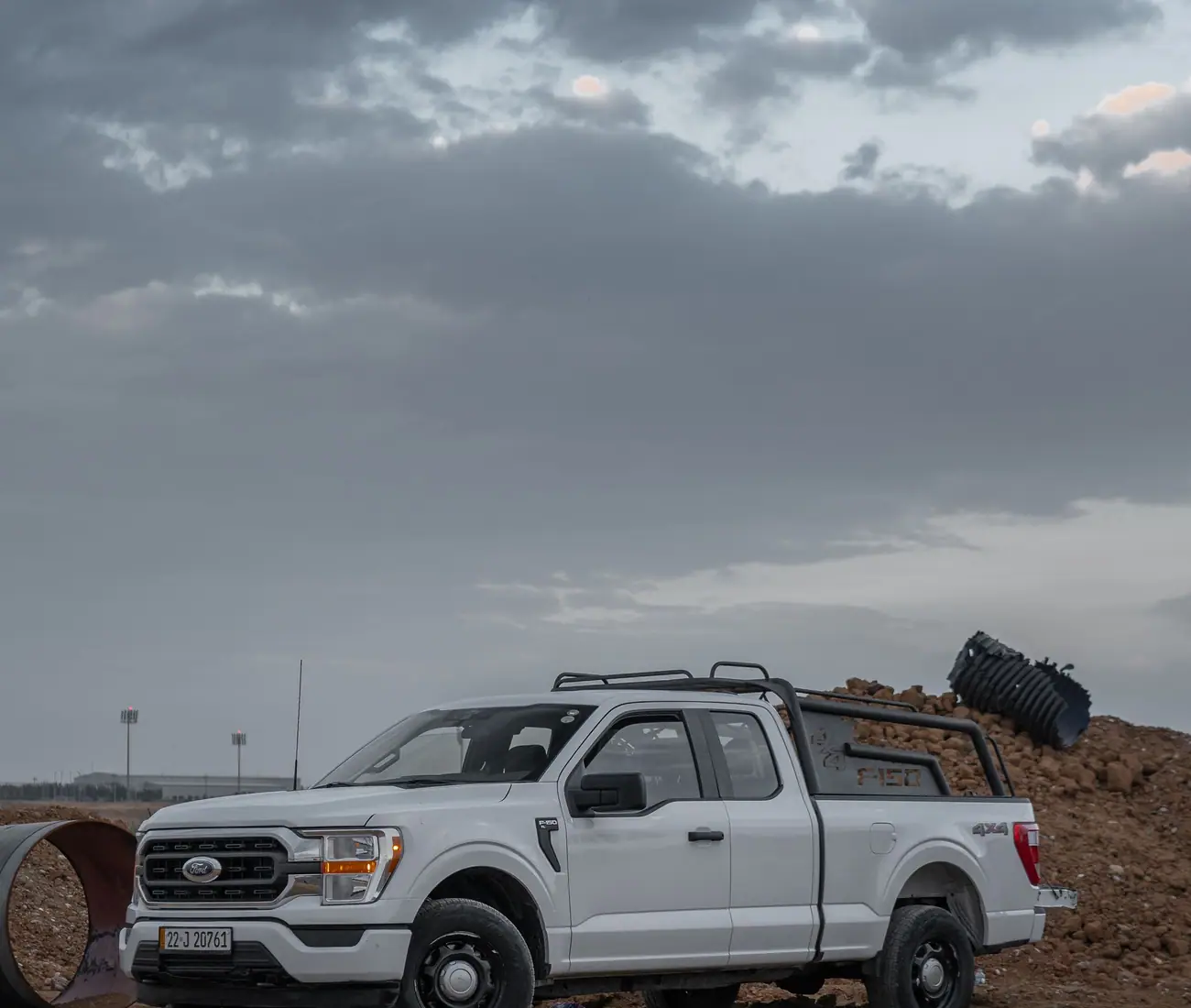
A work truck is two jobs on one chassis: a cab that curves like a passenger body, and a bed that is flat panel interrupted by rails, cleats, a tailgate handle and a camera. Service pickups also arrive carrying more bolt-on equipment than any other class in a fleet, ladder racks, headache racks, toolboxes, beacon bars, and every item either comes off before installation or the graphic stops short of it.
- Turnaround
- Confirmed at quote
- From
- Quote on request
The bed is where the hours go
A truck bed reads as easy square footage until it is measured. Bed rails, stake pockets, tie-down cleats and the tailgate handle all sit proud of the panel, and the tailgate itself usually carries a camera, a badge and a handle that come off before film goes near them. Rail caps and bed protectors are unbolted rather than trimmed around, because leaving them fitted means the graphic terminates on a visible face where road spray gets underneath it. On a short bed that work is close to half a day of the booking.
Textured plastic will not hold film
Most trucks leave the factory with grained black fender flares, running-board trim, mirror caps or a bumper cap. Film does not bond to a heavily textured surface: it bridges the grain instead of keying into it, then releases from the high points. The painted metal is wrapped and the grained plastic is left alone, or the design is planned so the break falls on a panel line and reads as intentional rather than as an edge the installation ran out of room at. A spray-in liner rolled over the rail cap is a hard stop for the same reason.
Racks, boxes and anything bolted through a panel
Ladder racks, headache racks, crossover toolboxes, bull bars, beacon bars and tonneau covers all change the job. Anything that bolts through a painted panel comes off so film runs underneath it and goes back on afterward, which means the mounting hardware, the fasteners and enough bay time to do that work twice. A folding tonneau normally stays off for the duration. Equipment fitted to the truck should be listed at booking: an unmentioned rack is the most common reason a truck runs a day past its slot.
Where a work truck wears first
Rocker panels, the leading edge of the hood and the lower tailgate take the most abuse on a pickup in service. Tires throw gravel at the rockers, the hood catches everything the interstate lifts, and the tailgate gets leaned on, loaded over and dropped against trailer tongues. On a truck that works, those areas age visibly ahead of the rest of the vehicle. We lay the panels out so the pieces most likely to be hit are single sections that can be replaced on their own, rather than running a graphic across a seam that turns a scuff into a large repair.
On the vehicle
Film down, then heat
Every work truck wrap comes down to these two: film worked onto the panel by hand, and heat driven into every recess so it stays where it was put.
Films and finishes for work truck wraps
Work Trucks questions
Will the fender flares and running boards be covered?
- Not where they are the textured factory plastic. Film bridges heavy grain rather than bonding into it and releases from the high points, so it fails early. We either leave them black, which reads as intentional on a work truck, or wrap them like any other panel once they have been smoothed and painted.
Do the toolbox and tonneau cover have to come off?
- Yes, and they normally stay off for the whole booking. A toolbox bolted through the bed rail has to come out so film runs underneath it, otherwise the graphic ends at an exposed edge that road spray gets behind. Mounting hardware should come in with the truck.
Can just the bed sides and tailgate be lettered?
- Yes, and on a service fleet that is often the sensible coverage. The bed sides and tailgate carry the name and number at eye level in traffic, and they are also the panels most likely to need redoing. A partial layout that keeps each of those panels as its own piece makes a later repair cheap instead of total.
Can a service or utility body be wrapped?
- Yes, with the compartment doors treated as individual panels. Film finishes at each door edge so the doors open without dragging, and hinges, latches and lock cylinders are worked around rather than covered. One continuous image across a bank of compartment doors will show a break at every gap, so the layout is planned around them.