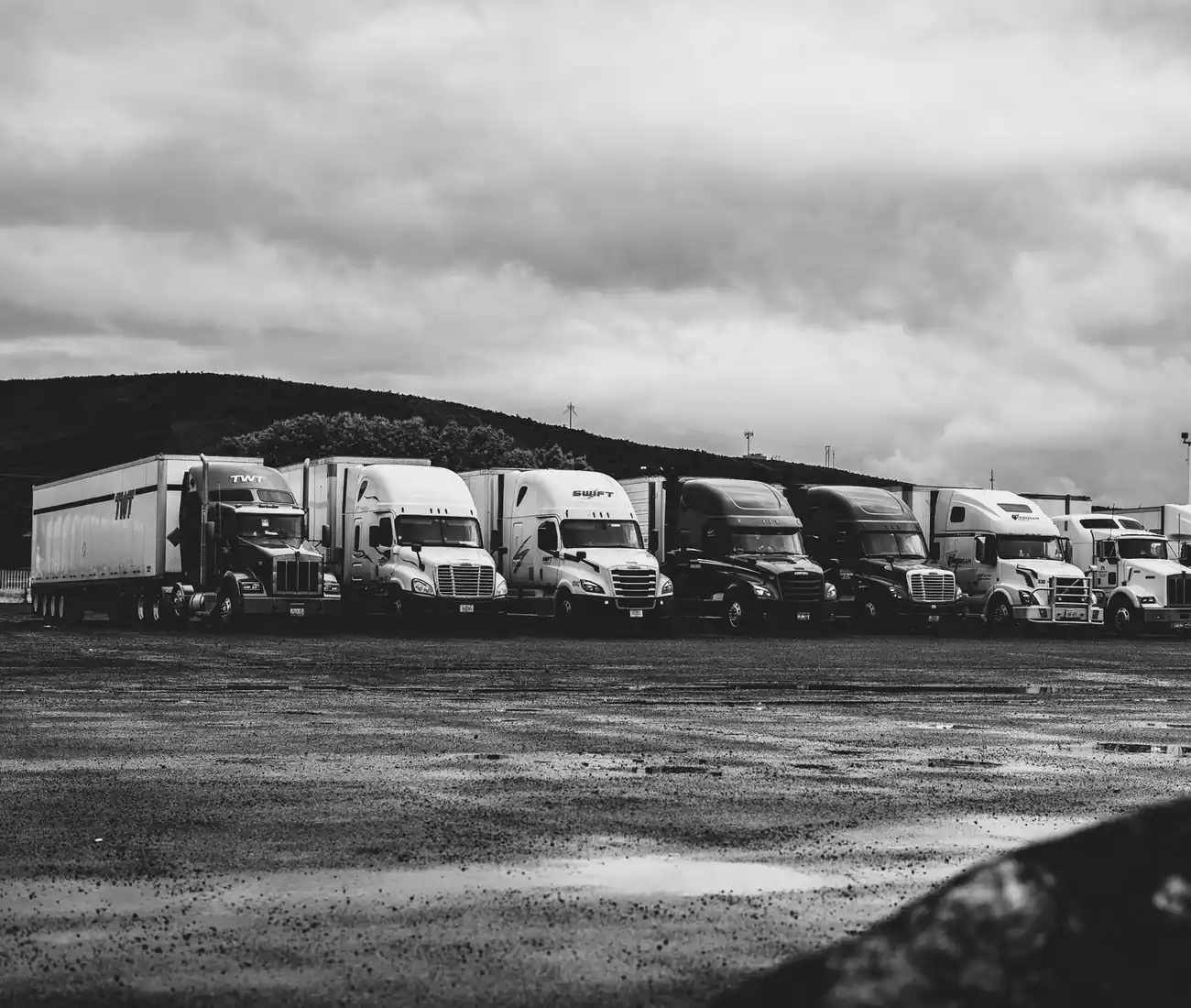
Vehicles
Fleet vehicle wraps in Charlotte
A fleet program is a scheduling and records problem more than an installation one. The design work happens once. After that the constraints are how many vehicles can be off the road at a time, how accurately each body style has been measured and recorded, and how closely unit eleven matches unit one when it arrives two years later. The program is built around those three rather than around bay capacity.
- Turnaround
- Confirmed at quote
- From
- Quote on request
Staging the rollout so the fleet keeps earning
Few operators can put a whole fleet into a bay at once, and those who try lose more in downtime than they save in scheduling. Vehicles are taken one or two at a time on a rolling booking sequenced around routes, so no more than a manageable share of the fleet is out of service in any week. A ten-van fleet done two at a time is five passes through the bay with predictable gaps, rather than one stretch with nothing on the road. Where the business has a seasonal trough, that is the window to compress into. Where it does not, staggering costs nothing extra.
Vehicle capture and the template library
Before anything is printed, each body style in the fleet is captured: year, make, model, wheelbase and roof height recorded, panel measurements taken off the actual unit, and both sides photographed square-on from a fixed distance with door and body seams marked. We treat catalog templates as a starting point and verify them against the vehicle, because trim levels move handle positions, mirror mounts and swage lines between model years, and a template that is close is still wrong at the edges. The library is keyed by body style rather than by unit, so a second van of the same configuration needs no new capture.
One design system across several different shapes
A layout that works on a Transit side does not automatically work on a tailgate or a twenty-four foot box, and this is where fleet programs usually fail. The same artwork gets scaled up until the mark floats in the middle of a box side, then scaled down until the phone number is unreadable on a tailgate. Each vehicle class is laid out separately from one design system, consistent color, consistent placement logic, type sized for the panel it sits on, so the fleet reads as one fleet across a parking lot without every unit being a stretched copy of a single file.
Re-orders and the eleventh vehicle
The hard part of a fleet program is not the first ten vehicles. It is the eleventh, bought two years after the rest. Print output drifts between media lots, printers and laminate batches, and a new van parked beside a weathered one shows any difference immediately. We hold the print files, the color build, the media and laminate combination and the panel measurements for each class on record, so a later addition is a reprint rather than a redesign. Where a new unit will not match the older ones closely enough to park beside them, we say so before the order rather than letting it surface at handover.
Numbering, removals and vehicles that leave the fleet
Fleets churn, and a graphic that has not been planned for removal costs money at the end of a vehicle life. Unit numbers are applied as separate cut decals over the printed panel, so renumbering a vehicle does not mean reprinting a side. We schedule removals into the program like any other booking rather than handling them as an emergency the week before a sale or a lease return, since rushed removal is where paint damage and inspection disputes come from. A vehicle sold with the branding still on it puts the company name on the road under someone else’s control, which is reason enough to book the strip before the sale closes. When a unit is totaled the film is not recoverable, but its files stay on record, so the replacement vehicle is a reprint against known measurements.
On the vehicle
Film down, then heat
Every fleet vehicle wrap comes down to these two: film worked onto the panel by hand, and heat driven into every recess so it stays where it was put.
Films and finishes for fleet vehicle wraps
Fleet questions
How many vehicles can be off the road at once?
- Usually one or two, deliberately. Bay capacity is not the limiting factor; operations are. A rolling schedule that stages a pair at a time keeps the fleet earning and still gives each unit the same bay time it would get as a standalone job.
Does a program cost less per vehicle than one-off work?
- Design and setup happen once and are spread across the program rather than repeated per unit, so later vehicles of the same class are quoted below the first. Beyond that the mix matters more than the count: ten identical vans and five different body types are very different programs.
Can a vehicle be added to the scheme years later?
- Yes, and that is what the records exist for. A later addition is a reprint against the recorded color build, media combination and panel measurements rather than a fresh design. What we cannot promise is that new film will match a three-year-old wrap that has lived outside. If those two vehicles will park together, we flag it before the order.
What happens when a fleet vehicle is sold or totaled?
- Film comes off before a sale or a lease return, booked as its own job. On a total loss there is nothing to recover from the vehicle, but the panel files and measurements stay on record, so the replacement unit is a reprint rather than a new setup. Either way, branding should not leave the fleet still attached to the vehicle.