Services
Decals and lettering in Charlotte
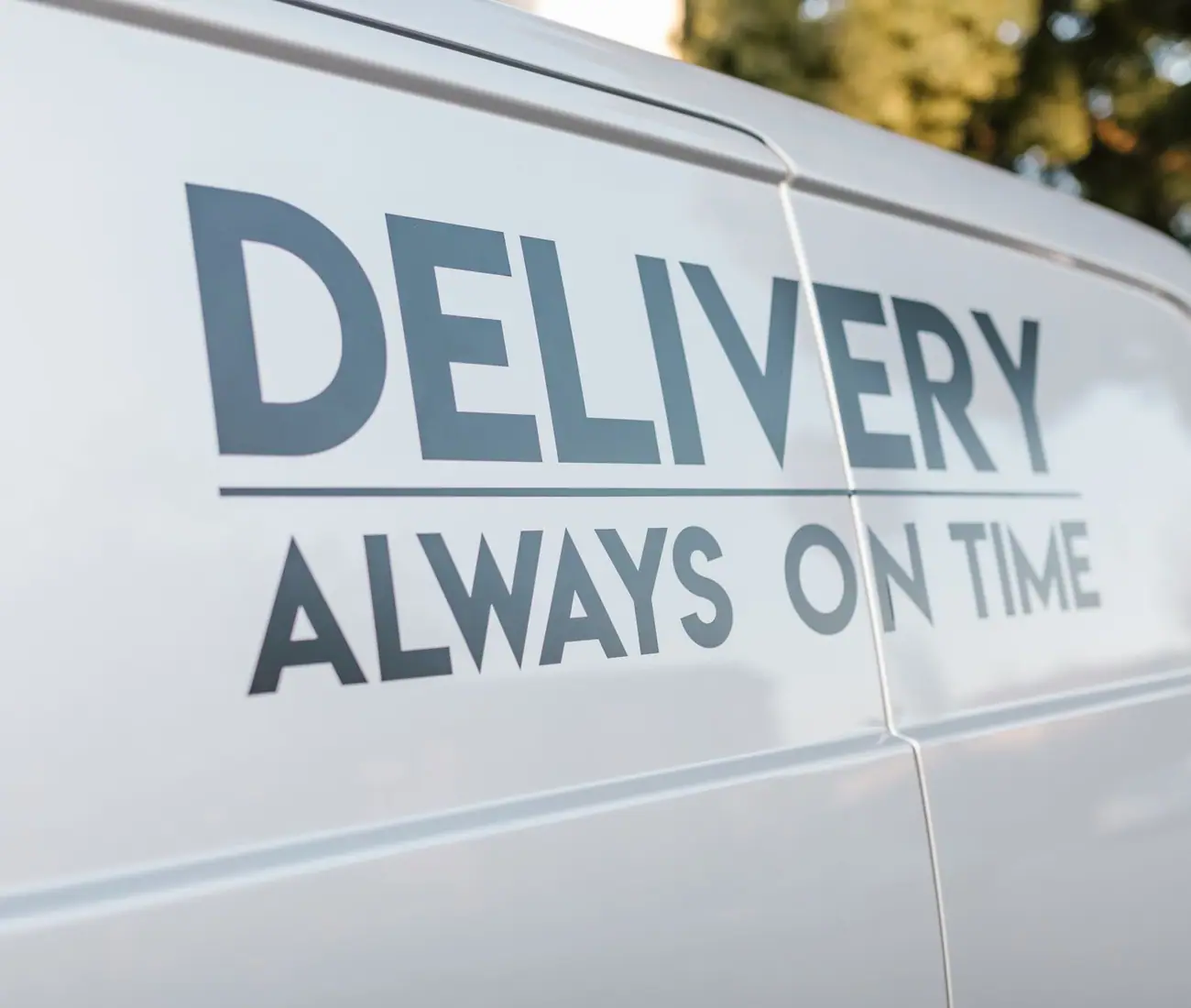
Cut vinyl lettering is the smallest graphics package a commercial vehicle can carry and the only part of it a roadside inspection has an opinion about. A name-and-number package is solid-color film cut to shape, weeded by hand and laid down as one registered piece: no print, no photograph, no ink to shift. It is also compliance work. The federal marking rule sets what has to appear on a commercial motor vehicle, how far away it has to be readable and what contrast it needs, and a unit that fails on that fails regardless of how good the rest of the graphics look.
- From
- Quote on request
Specification
- Coverage
- Cut vinyl name blocks, identification and unit numbers, and phone and web decal packages, applied to doors, sides and rear.
- Materials
- Solid-color cut vinyl in a grade rated for unlaminated outdoor use, applied on transfer tape, with removable-adhesive film where markings change with the carrier.
- Compliance
- Marking of commercial motor vehicles under 49 CFR 390.21: carrier legal or trade name plus the identification number preceded by USDOT, on both sides, in a sharply contrasting color, readily legible in daylight from 50 feet while stationary, and maintained legible. The rule sets a distance, not a letter height.
- Expected life
- Confirmed at quote
- Warranty
- Confirmed at quote
Cut vinyl is a different product from a printed wrap
Cut lettering starts as a solid-color film, so the color is the material rather than ink sitting on top of it, and there is nothing in it to fade at a different rate from anything else. The artwork is cut on a plotter, the waste is weeded away by hand, and what is left is picked up on transfer tape and applied as a single registered piece. What makes the film grade matter more here than on printed work is the edges. A printed graphic carries an overlaminate that caps every cut edge; a cut letter has no cap at all. The whole perimeter of every character is exposed to wash brushes, grit and UV from the first day, and every counter inside a letter is another exposed edge. So lettering is cut from film rated for unlaminated outdoor use rather than from whatever remnant is on the bench, and an economy film that survives on a flat sign panel comes apart on a door washed every week.
What the federal marking rule actually requires
The marking rule for commercial motor vehicles is 49 CFR 390.21. It calls for the carrier's legal name, or a single trade name, together with the identification number preceded by the letters USDOT, displayed on both sides of the vehicle. What it sets on the marking itself is a legibility standard rather than a type specification: the lettering must contrast sharply in color with the background it is placed on, must be readily legible in daylight from a distance of 50 feet while the vehicle is stationary, and must be kept that way. There is no federal letter height in that rule, there is a distance test, which is why we cut markings with margin over what would just pass rather than to the smallest size that might. Which vehicles carry the obligation, and what a given operating authority requires beyond it, is a question for the carrier and its regulator. We cut and place what the carrier supplies, and we flag a layout that will not hold up to the contrast or the distance.
Whose number belongs on the door
On a leased or owner-operator unit, the marking that belongs on the door is that of the carrier operating the vehicle, the one whose authority the load moves under and which answers for its safe operation, rather than whoever holds the title. That has a practical consequence for how the decals are built. Authority changes, lease arrangements end, and a truck can move between carriers more often than it changes paint. So the name block, the identification number and any unit number are cut as separate pieces working to a common baseline instead of as one bonded panel, which turns a change of carrier into re-cutting one element and reworking one area of a door rather than stripping the whole side. Where a unit is expected to move regularly we use a removable-adhesive film for those pieces specifically, so they come away cleanly without heat and without leaving a shadow in the paint.
Phone numbers, web addresses and what is actually readable
Readable distance is set by stroke weight and contrast at least as much as by height. A condensed light face at a generous size is harder to read at speed than a plain medium face two steps smaller, and a phone number in a color close to the panel behind it is unreadable at any size at all. A decal package is therefore laid out by where each element gets read from. The company name goes on the side, where it is taken in at traffic speed by someone with no reason to work at it. The phone number goes on the rear, where a following driver stopped at a light has both the time and the proximity to write it down. The web address is kept short enough to be taken in at a glance, because nothing longer than that will be. Required markings are placed where an inspector expects to find them, low on the door or forward on the side, rather than worked into artwork where they have to be hunted for.
Vehicles we apply this to
Decals & Lettering questions
Is there a required letter height for a USDOT number?
- Not in the federal marking rule. That rule sets a legibility test instead: a sharply contrasting color, and readable in daylight from 50 feet with the vehicle stopped. State rules for intrastate operations can be more specific than the federal one. We cut to a size that clears the distance test comfortably and confirm the name and the number against what the carrier supplies in writing.
Does the MC number have to be displayed as well?
- The federal marking rule names the carrier name and the USDOT number; a docket or MC number is not part of that requirement. Plenty of carriers display one anyway, and a shipper, a broker or a state requirement can ask for it. We will cut and place it wherever a carrier wants it. What a particular operation is obliged to display is a question for that carrier and its regulator rather than for us.
Can lettering be applied over a wrap?
- Yes, and the contrast requirement is what governs it. The rule measures the lettering against the background it actually sits on, and after a wrap that background is artwork rather than paint. Markings placed over a busy or light-toned area of a graphic can be present and still fail the test, so the marking area is agreed at the design stage and held as a quiet block behind the letters.
How long does a lettering package take?
- A name, number and phone package is normally a same-day or next-day job and does not tie the vehicle up the way printed coverage does. What sets the schedule is having the exact legal name, the identification number and any unit numbers confirmed in writing before the plotter runs, because a misspelled name is a recut rather than an edit.