Services
Reflective and safety markings in Charlotte
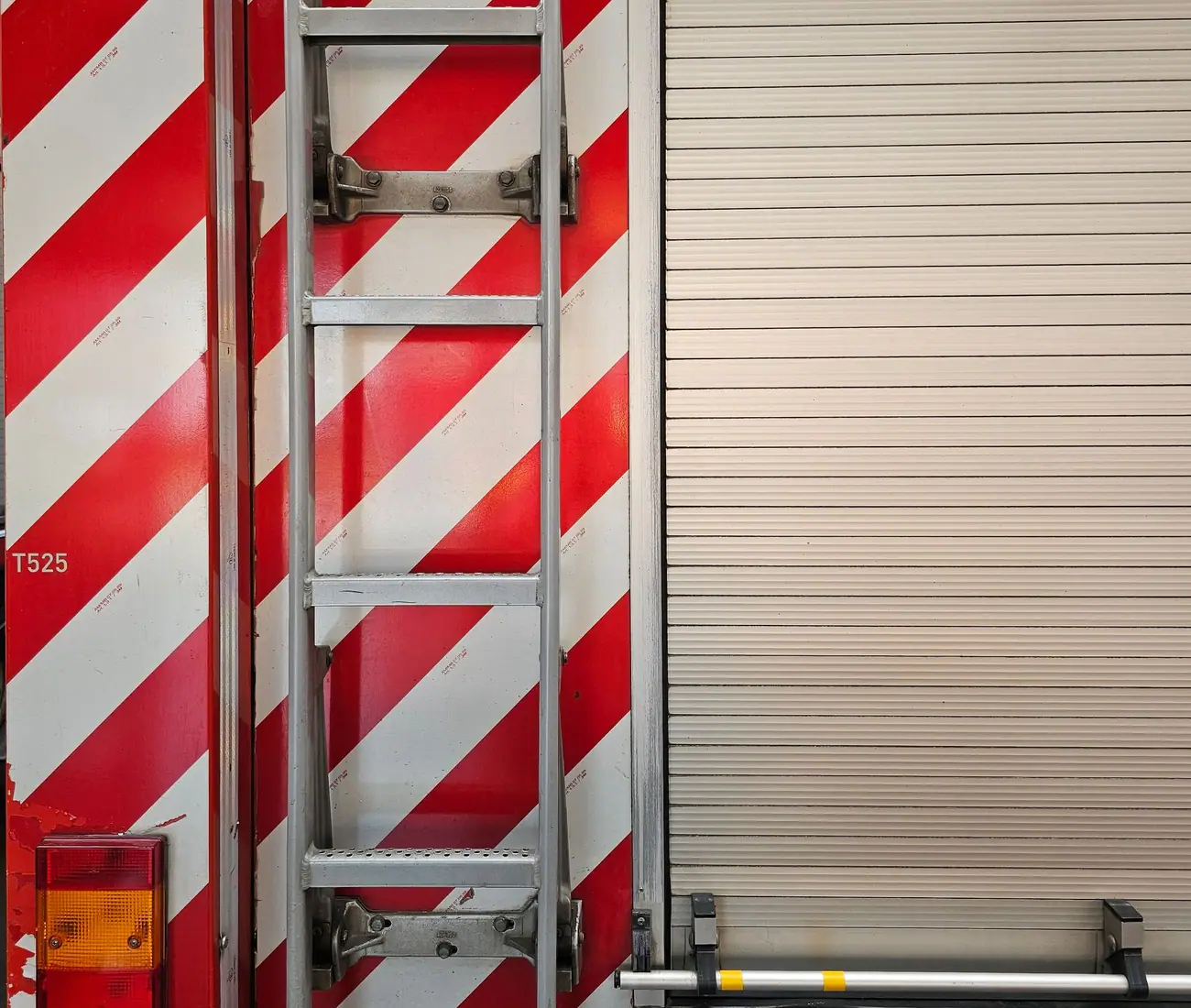
Reflective work is not decoration with a bright finish on it. Conspicuity tape, rear chevrons and reflective striping exist to put a vehicle into a driver's headlights before that driver has processed anything else about it, and most of it is governed either by a federal standard or by a contract the operator has already signed. The material is certified and the placement is specified, so neither is a design decision. What is a design decision is everything that has to be laid out around them.
- From
- Quote on request
Specification
- Coverage
- Conspicuity tape runs, rear chevron panels and reflective striping, bonded to the vehicle surface and kept clear of printed graphics.
- Materials
- Prismatic and glass-bead retroreflective sheeting carrying its certification legend, cut as flat panels and straight runs, with translucent inks where a kit is printed.
- Compliance
- Conspicuity sheeting carries a DOT-C2, DOT-C3 or DOT-C4 legend certifying it to FMVSS No. 108, the digit giving its width in inches. Required markings are never covered, overlapped or shaded by a graphic, and lifted tape is replaced with new certified material. Chevron specifications come from the operator, since outside fire apparatus they are set by contract rather than by federal rule.
- Expected life
- Confirmed at quote
- Warranty
- Confirmed at quote
What the DOT-C2 legend on the tape means
Conspicuity tape is alternating red and white retroreflective sheeting, and the small legend repeated along its length is the manufacturer's certification that the material meets the federal lighting standard, FMVSS No. 108. The digit in that legend is the width of the sheeting in inches: DOT-C2 is a two-inch tape, DOT-C3 three, DOT-C4 four. That legend is what an inspector looks for, and it is the reason generic reflective tape from a supply house is not a substitute however similar it looks on the roll. Retroreflectivity is also a consumable rather than a permanent property. Sheeting loses brightness to UV, to abrasion and to the road spray thrown at the exact band of a vehicle it gets applied to, so a strip that has gone dull is replaced rather than cleaned and put back into service.
Certified material bonds to the vehicle, not to a graphic
Conspicuity sheeting is engineered to bond to the vehicle's own surface. Laid on top of printed film it is bonded to that film's laminate instead, which is a weaker joint and hands road spray a peel path under both layers at once. So where a graphic and required markings share a vehicle, the sheeting goes to the substrate and the printed layout terminates clear of it. Tape lifted off to allow an installation is not refitted: its adhesive is spent and so is a share of its brightness, so it comes off and new certified sheeting goes back in the same position. Nothing in a printed layout may cover, overlap or shade a required marking, and that includes rear marking plates and lamp lenses as well as the tape itself. Where a design wants the area the markings occupy, the design is what changes.
Chevron kits: the first question is who is requiring one
A rear chevron kit is not a single product, and the specification comes from whoever is asking for it. Fire apparatus is the one class with a written national standard behind it, which calls for a chevron pattern across at least half of the rear-facing vertical surface, in alternating colors, sloping down and away from the centerline. That standard has been renumbered recently, so the edition an apparatus is being built or refitted to is worth confirming with the department rather than assumed. For a utility truck, a tow truck, a highway maintenance unit or a contractor working an agency job there is usually no federal rule at all. The requirement lives in a municipal specification, a utility's contractor standard, a state agency contract or an insurer's schedule of conditions, and those documents disagree with each other about colors, stripe width and how much of the rear has to be covered. We ask for the written spec before anything is cut, because a chevron kit built to the wrong document is worth nothing to the operator who has to pass an audit holding it.
Reflective film behaves nothing like wrap vinyl
Retroreflective sheeting is a built-up construction, a prismatic or glass-bead optical layer beneath a sealed face, and it is thicker, stiffer and far less extensible than print film. It will not conform into a deep recess or around a compound curve, and forcing it there crushes the optics and kills the return in exactly the panel that was supposed to be bright. Reflective work is therefore planned as flat panels and straight runs, cut into segments wherever the body turns, with terminations at panel edges. Printing over it costs light as well: translucent inks or a printable reflective grade are used, and every layer above the optics takes some of the return with it, so a heavily inked panel reads dimmer at night than plain sheeting does. Where a full-color graphic and a bright marking are both wanted on the same face, those are two materials in two areas rather than one compromise across both.
Vehicles we apply this to
Reflective & Safety questions
Can a graphic run over the conspicuity tape?
- No, and the order of work is as much the reason as the rule is. Certified sheeting is meant to bond to the vehicle surface; over a laminate it holds less well and gives spray a path under both layers. Where tape has to come off for an installation, we replace it with new certified material rather than refitting the old, and the printed layout is terminated clear of the band.
Are chevrons required on a service or utility truck?
- Usually not by federal rule. The requirement normally comes from a contract, a municipal or agency specification, or an insurer, and those documents set the colors, the stripe width and the coverage. We work from the written spec and will ask for it before quoting rather than build to a general idea of what a chevron kit looks like.
Can reflective be printed in company colors?
- Yes, with translucent inks or a printable reflective grade, and it costs brightness. The optics return light back through everything above them, so every layer of ink takes a share, and dark saturated colors take the most. A design that needs both full-color print and full return is laid out as two materials in two areas rather than as one material doing both badly.
Does reflective sheeting wear out?
- It dulls. UV, abrasion and constant spray at the lower band of a vehicle all reduce how much light comes back, and a strip that looks intact in daylight can be returning very little at night. We treat it as a replaceable item on a schedule rather than as a permanent part of the graphics, and we check it whenever a unit comes in for other work.