Vehicles
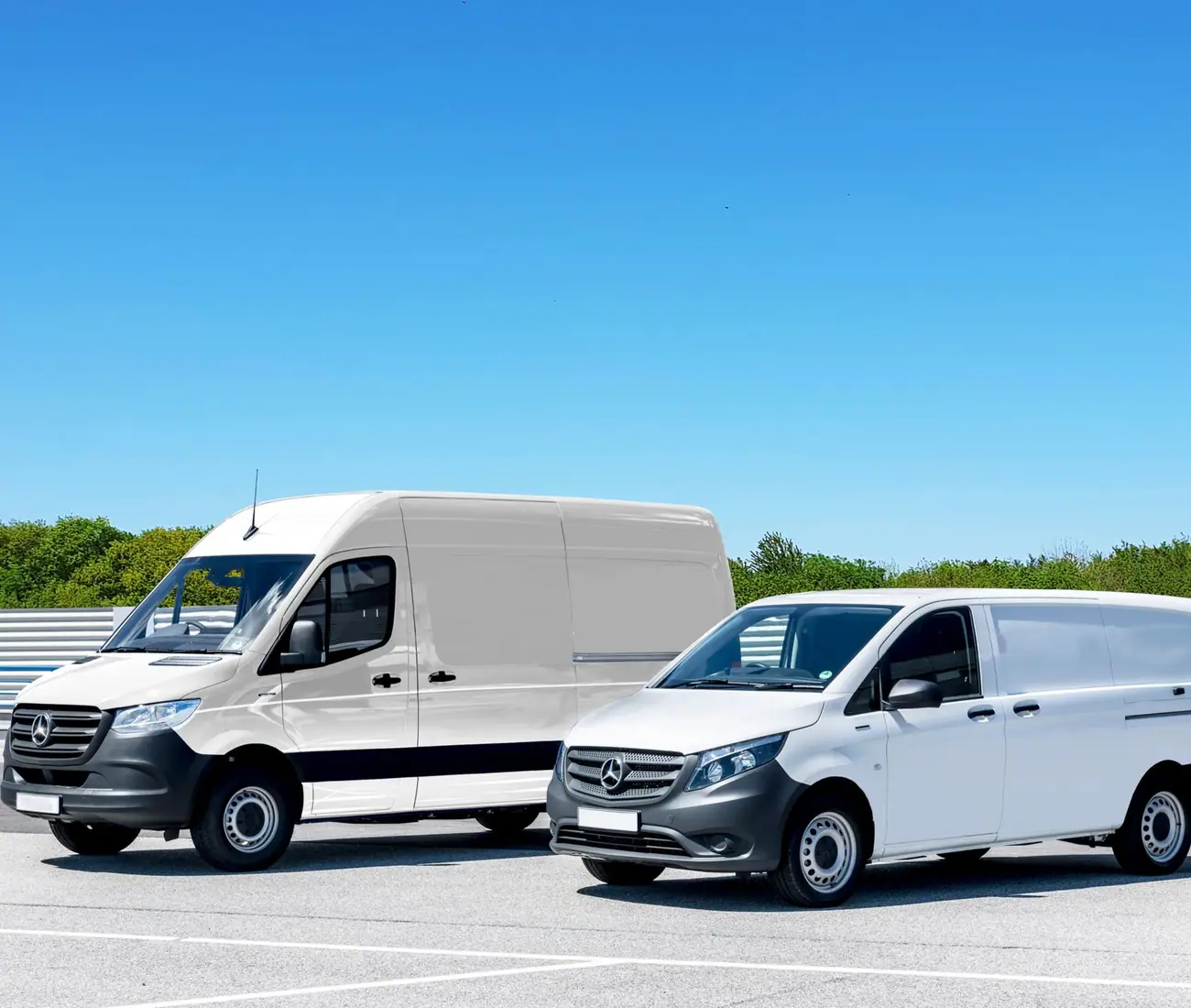
Van and Sprinter wraps in Charlotte
A cargo van is the most efficient advertising surface in most fleets. The side is a single long flat panel that a printed graphic crosses without a cut, which is why coverage costs less per readable square foot here than on any body style short of a box truck. The work concentrates at the ends and the edges: sliding-door tracks, barn-door gaps, deep body swages, and on a high roof, panel area above the height an installer can control from the floor.
- Turnaround
- Confirmed at quote
- From
- Quote on request
The flat side goes on fast. The last two feet do not.
A 144-inch Sprinter side is close to the largest uninterrupted surface on any vehicle short of a box body, and a printed design runs across it without a cut. What consumes the schedule is everything that side runs into. Deep body swages are worked into with heat and pressure rather than bridged, because film stretched across a channel pulls back out of it in the first hot week. Quarter glass, grab handles, fuel doors and the B-pillar each break the run, and each one is a separate termination.
Sliding doors and barn doors have to register
A sliding door and its track form a moving joint in the middle of the graphic. Film is cut and finished at the door edge and along the track so the door travels without dragging vinyl, and the two halves of the design are aligned to read correctly with the door shut, which is the only state anyone sees it in. Rear barn doors present the same problem twice: each door carries part of the artwork and both have to register across the center gap with the van level and the doors closed. Nothing crosses those gaps in one piece.
High roofs change the method, not the result
On a high-roof van the top of the side panel sits above eight feet, past the height at which an installer standing on the floor can hold even pressure on a squeegee. That panel is installed from platforms with a second set of hands, in longer overlapping passes at a slower pace. The finished result is unaffected. The schedule is not: a high-roof extended-wheelbase van runs a day longer than a low-roof cargo van of the same model.
Racks, shelving and the holes already in the panel
Trade vans arrive carrying roof racks, ladder racks, pipe carriers, and holes where the last rack was mounted. Anything bolted to a painted panel comes off so film runs underneath it, then goes back through the same holes. Old fixing holes and any corrosion around them should be flagged before quoting, because film over a corroding edge lifts at that point first and takes the surrounding graphic with it. Interior shelving can stay, since only the exterior is worked on, but the van has to be clear enough for the doors to stand open all day.
On the vehicle
Film down, then heat
Every van wrap comes down to these two: film worked onto the panel by hand, and heat driven into every recess so it stays where it was put.
Films and finishes for van wraps
Vans & Sprinters questions
Can the sliding door still open once the van is wrapped?
- Yes. Film is cut and finished at the door edge and along the track so nothing drags or tears as the door travels, and the design is registered to align with the door closed. What we cannot do is carry film across the door gap as a single continuous piece.
Do the ribbed rear doors cause a problem?
- Corrugation is the one surface film cannot be forced onto. Vinyl bridges a rib and then releases from it. On a strongly ridged panel the options are to follow the profile with heat and accept a visible line through the artwork, or to lay the design out so nothing critical crosses it. We show both before anything is printed.
How long is a Sprinter off the road?
- Full coverage on a standard wheelbase is the baseline booking, a 170-inch high roof sits above it because the upper panel is worked from platforms, and sides-and-rear-doors only sits below it. We put the actual window on the quote for the specific van rather than publishing a figure the shop has not agreed to. It stays indoors overnight, so the downtime falls on consecutive working days rather than across a weekend.
Can two vans be scheduled so only one is out of service at a time?
- Yes, and that is the normal arrangement for a small trade fleet. The vans are booked back to back so the business never loses both at once, and the second reuses the print files from the first, which removes the design stage from its booking entirely.